
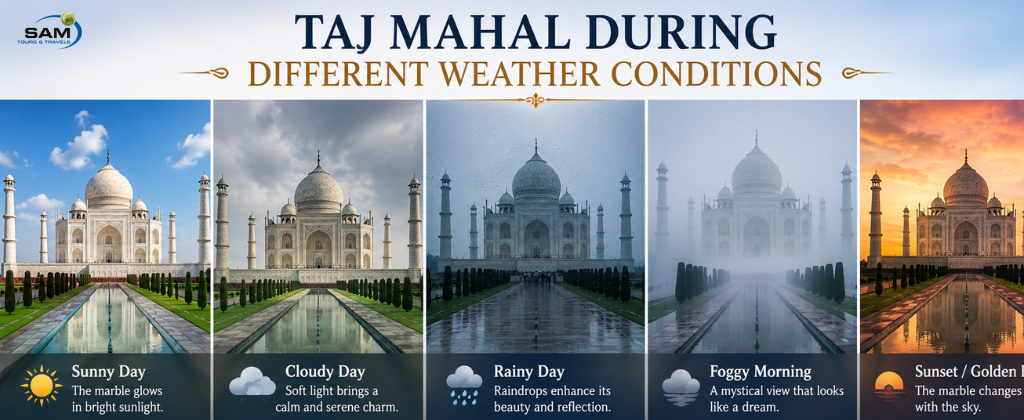
The Taj Mahal is one of the most photographed monuments in the world, but many travelers don’t realize that its appearance changes dramatically with the weather. From misty winter mornings and colorful spring gardens to dramatic monsoon skies and bright summer sunshine, every season gives the monument a unique personality. If you visit at different times of the year, you will notice that the marble reflects light differently, the surrounding gardens transform, and the overall atmosphere creates a completely new experience.
Understanding how the Taj Mahal looks during different weather conditions helps travelers choose the best time for sightseeing, photography, and comfortable exploration. Whether you are planning your first visit or returning for another memorable trip, this guide explains what you can expect throughout the year.
Why Weather Makes the Taj Mahal Look Different
The Taj Mahal is built from white Makrana marble, a material famous for reflecting natural light. This marble absorbs and reflects sunlight in different ways depending on the weather, humidity, clouds, and the position of the sun. As a result, the monument rarely looks exactly the same twice.
Several weather elements influence its appearance:
- Bright sunlight creates a dazzling white glow.
- Cloudy skies soften the colors of the marble.
- Rain makes the monument appear fresh and polished.
- Winter fog adds a mysterious atmosphere.
- Sunrise and sunset paint the marble with shades of pink, gold, and orange.
This natural transformation is one of the reasons millions of visitors return to the Taj Mahal again and again.
Taj Mahal in Summer (April to June)
Summer in Agra is hot, with temperatures often ranging from 35°C to 45°C. Although the weather can be challenging, there are still advantages to visiting during this season.
Early mornings provide pleasant temperatures and fewer crowds. The white marble shines brilliantly under the clear blue sky, creating excellent conditions for photography.
Advantages
- Clear visibility
- Bright blue skies
- Less waiting at security checkpoints
- Excellent sunrise photography
- Fewer tour groups
Challenges
- High afternoon temperatures
- Marble floors become extremely hot
- Walking through the gardens can be tiring
Travel Tips
- Arrive when the gates open.
- Carry a reusable water bottle.
- Wear a hat and sunglasses.
- Use sunscreen.
- Wear light cotton clothing.
- Finish your visit before noon whenever possible.
Taj Mahal During the Monsoon (July to September)
The monsoon transforms the Taj Mahal into one of India’s most romantic destinations. Rain showers wash the marble, making it appear brighter and cleaner. Dark clouds create dramatic backgrounds that photographers love.
After rainfall, reflections often appear on wet pathways, producing beautiful mirror-like photographs.
What Makes Monsoon Special?
- Fresh green Mughal gardens
- Cooler temperatures after rain
- Beautiful cloud formations
- Unique photography opportunities
- Fewer tourists
Rain usually comes in short bursts, so sightseeing is still possible on many days.
Things to Remember
- Carry an umbrella.
- Wear waterproof footwear.
- Protect your camera with a rain cover.
- Check the weather forecast before visiting.
Taj Mahal in Autumn (October to November)
Many experienced travelers consider autumn one of the best times to visit the Taj Mahal. The monsoon has ended, leaving behind clean air, pleasant temperatures, and lush gardens.
The weather becomes ideal for long walks around the complex without the intense summer heat.
Why Autumn Is Popular
- Comfortable temperatures
- Clear skies
- Green landscapes
- Excellent visibility
- Comfortable sightseeing throughout the day
Sunrise during autumn often produces soft golden light that beautifully highlights the marble.
Taj Mahal in Winter (December to February)
Winter is the busiest tourist season in Agra. Daytime temperatures usually range between 8°C and 22°C, making sightseeing very comfortable.
However, winter mornings often bring thick fog, which creates a magical atmosphere but can temporarily reduce visibility.
The Beauty of Winter
The Taj Mahal emerging slowly through the fog is one of the most unforgettable sights in India. As the sun rises, the fog gradually clears, revealing the monument in a dramatic way.
Benefits of Visiting in Winter
- Pleasant weather
- Comfortable walking conditions
- Perfect for full-day sightseeing
- Ideal weather for families and senior travelers
Challenges
- Morning fog may delay clear views.
- Weekends and holidays become crowded.
- Tickets may sell out quickly during peak season.
Booking tickets in advance is highly recommended.
Taj Mahal During Foggy Mornings
Fog is common during December and January. Some visitors worry about reduced visibility, but photographers often consider fog one of the most artistic weather conditions.
Instead of seeing the monument immediately, visitors experience the Taj Mahal slowly appearing from the mist. This creates an unforgettable atmosphere that cannot be experienced in other seasons.
For the best results, wait until around 8:30–9:30 AM, when the fog usually begins to lift.
Taj Mahal in Spring (February to March)
Spring is one of the most beautiful seasons for visiting the Taj Mahal. Temperatures remain pleasant, flowers bloom throughout the Mughal gardens, and the weather is ideal for walking.
Colorful flower beds contrast beautifully with the white marble, creating stunning photographs.
Why Visit in Spring?
- Blooming gardens
- Comfortable temperatures
- Longer daylight hours
- Excellent photography
- Pleasant sightseeing conditions
Many professional photographers schedule portrait and travel photography sessions during spring because of the soft natural lighting.
Taj Mahal at Sunrise in Different Weather Conditions
Sunrise is widely considered the best time to visit the Taj Mahal.
Summer Sunrise
The sky remains clear, allowing the first rays of sunlight to illuminate the marble with a warm golden glow.
Winter Sunrise
Morning mist creates a mysterious appearance before the monument gradually becomes visible.
Monsoon Sunrise
Clouds add dramatic contrast, making every sunrise unique.
Spring Sunrise
Gentle light, blooming gardens, and pleasant temperatures combine to create one of the most enjoyable experiences.
Arriving at least 30 minutes before sunrise allows you to be among the first visitors inside.
Taj Mahal at Sunset Throughout the Year
Sunset offers a completely different perspective. The marble changes from bright white to soft cream, golden, and occasionally pink depending on atmospheric conditions.
During clear weather, the monument reflects warm evening colors beautifully.
Monsoon sunsets can be especially dramatic because clouds create colorful skies after rainfall.
How Weather Affects Photography
Every season offers unique photography opportunities.
Summer
- Bright blue backgrounds
- Sharp architectural details
- High contrast images
Monsoon
- Dramatic clouds
- Reflections on wet pathways
- Vibrant greenery
Winter
- Soft lighting
- Dream-like fog effects
- Romantic atmosphere
Spring
- Colorful flowers
- Balanced natural lighting
- Comfortable shooting conditions
Professional photographers often recommend visiting both at sunrise and sunset to capture different moods.
How to Dress for Different Weather Conditions
Choosing appropriate clothing improves your overall experience.
Summer
- Lightweight cotton clothes
- Sunglasses
- Wide-brim hat
- Comfortable shoes
Monsoon
- Quick-dry clothing
- Waterproof footwear
- Umbrella
- Waterproof bag
Winter
- Light jacket
- Sweater
- Comfortable walking shoes
- Scarf for early mornings
Spring and Autumn
- Light full-sleeve clothing
- Comfortable sneakers
- Sunglasses
- Water bottle
Which Season Is Best for Families?
Families usually enjoy winter and spring because temperatures remain comfortable for children and older visitors.
Autumn is another excellent option due to pleasant weather and smaller crowds compared to peak winter holidays.
Which Season Is Best for Photography?
Photography enthusiasts often have different preferences.
- Summer provides clear skies and crisp architectural shots.
- Monsoon creates dramatic landscapes.
- Winter offers artistic fog scenes.
- Spring delivers colorful gardens and balanced lighting.
Each season produces a completely different portfolio.
Best Time of Day Based on Weather
No matter the season, timing makes a big difference.
Summer: 6:00 AM to 9:00 AM
Winter: 8:00 AM onwards if fog is heavy
Monsoon: Between rain showers when clouds begin to clear
Spring & Autumn: Sunrise and late afternoon are equally enjoyable
Avoid visiting during the hottest afternoon hours in summer.
Practical Weather Tips for Visitors
Before your trip, check the weather forecast and prepare accordingly.
Some useful tips include:
- Carry drinking water.
- Wear comfortable footwear.
- Protect electronic devices during rain.
- Purchase tickets online in advance during winter.
- Keep sunglasses handy for bright sunny days.
- Allow extra travel time during foggy winter mornings.
These simple preparations can make your visit smoother and more enjoyable.
Frequently Asked Questions
Does the Taj Mahal look different in every season?
Yes. The white marble reflects sunlight differently depending on temperature, humidity, clouds, and fog, giving the monument a unique appearance throughout the year.
Which season is best to visit the Taj Mahal?
Spring (February–March), autumn (October–November), and winter (November–February) are generally considered the best seasons due to pleasant weather.
Is the Taj Mahal open during the monsoon?
Yes. The monument remains open during normal visiting hours unless there are exceptional weather-related restrictions.
Can I visit the Taj Mahal during heavy fog?
Yes. Although visibility may be limited early in the morning during winter, the monument remains open. Many visitors enjoy the magical atmosphere created by the fog.
Which weather is best for photography?
Sunrise in spring and autumn offers excellent lighting, while monsoon skies and winter fog create unique and dramatic compositions.
Final Thoughts
The Taj Mahal is breathtaking in every season, but each weather condition offers a completely different experience. Summer showcases dazzling white marble beneath crystal-clear skies, monsoon brings lush greenery and dramatic clouds, autumn offers ideal sightseeing conditions, winter creates magical fog-filled mornings, and spring fills the gardens with vibrant colors. By understanding how the weather changes the monument’s appearance, you can plan your visit to match your interests—whether that is photography, sightseeing, family travel, or simply enjoying one of the world’s greatest architectural masterpieces at its finest.