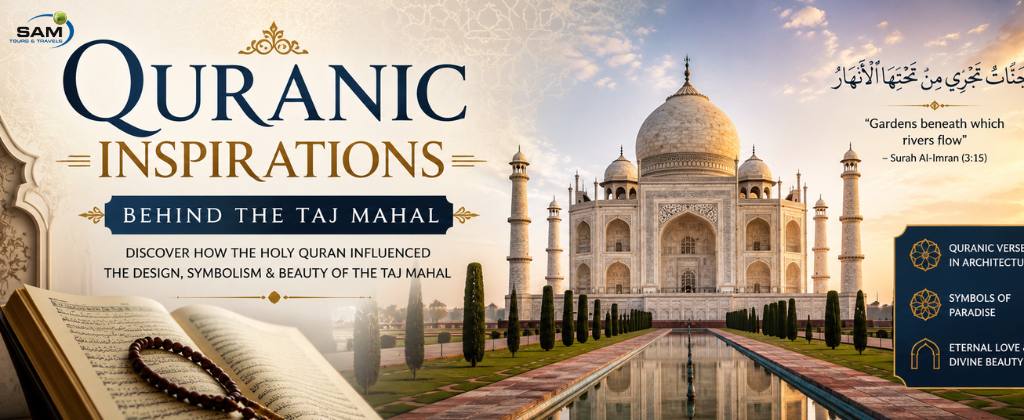
The Taj Mahal is admired worldwide for its breathtaking beauty, architectural perfection, and timeless love story. Yet beyond its gleaming white marble lies another fascinating dimension that many visitors overlook—its deep connection to Islamic art, spirituality, and the Quran. From elegant Quranic calligraphy carved into marble to the Paradise-inspired gardens and symbolic use of light, many elements of the Taj Mahal reflect ideas found in Islamic tradition.
It is important to note that historians distinguish between direct Quranic inscriptions and architectural features inspired by broader Islamic beliefs and artistic traditions. While not every detail of the Taj Mahal can be traced directly to a specific Quranic verse, many aspects of its design were intentionally created to evoke themes such as Paradise, divine mercy, purity, balance, and eternal life.
In this guide, we explore the major Quranic inspirations behind the Taj Mahal and explain the spiritual meaning of its remarkable design.
The Taj Mahal as a Symbol of Paradise
One of the strongest Islamic inspirations behind the Taj Mahal is the concept of Jannah, or Paradise. In the Quran, Paradise is described as a place of peace, beauty, flowing rivers, gardens, shade, and eternal happiness for the righteous.
The architects of the Taj Mahal designed the complex to reflect this heavenly vision. Visitors enter through a grand gateway and gradually discover symmetrical gardens, water channels, fountains, flowering plants, and finally the magnificent white mausoleum.
This carefully planned journey symbolizes moving from the earthly world toward an idealized vision of Paradise.
Quranic Calligraphy Throughout the Monument
Among the most obvious Quranic inspirations are the beautifully carved verses from the Quran found throughout the Taj Mahal complex.
These inscriptions appear on:
- The Great Gateway
- The entrance to the mausoleum
- Interior arches
- Decorative panels
- Several marble frames
Instead of serving only as decoration, these verses remind visitors of faith, God’s mercy, resurrection, and eternal life.
The black marble inlay creates a striking contrast against the white Makrana marble, making the verses both artistic and meaningful.
The Main Gateway and the Invitation to Paradise
The impressive entrance gate, known as the Darwaza-i-Rauza, contains some of the most significant Quranic inscriptions in the complex.
Among them are verses from Surah Al-Fajr (89:27–30):
“O tranquil soul, return to your Lord, well pleased and pleasing to Him. Enter among My servants, and enter My Paradise.”
These verses are especially meaningful for a mausoleum. They welcome the faithful soul into Paradise, reinforcing the spiritual purpose of the monument.
For many visitors, passing through this gateway feels symbolic, as though entering a sacred and peaceful space.
The Vision of Jannah in the Charbagh Gardens
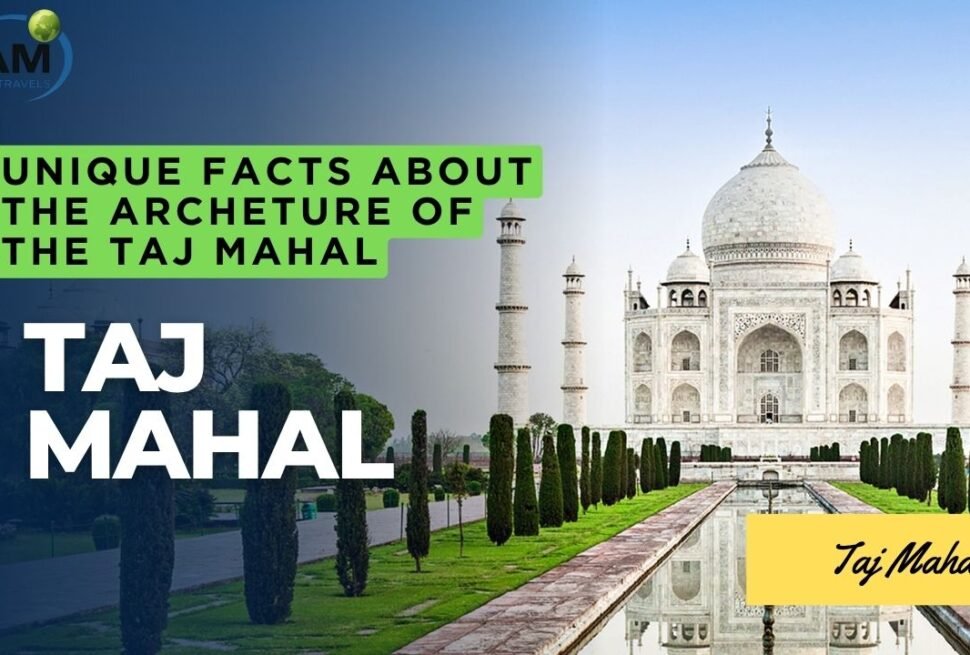
The famous Charbagh garden is more than a beautiful landscape—it reflects one of the central images of Paradise in Islamic tradition.
The Quran frequently describes Paradise as gardens beneath which rivers flow. Inspired by this imagery, the Taj Mahal’s gardens are divided into four equal sections by water channels.
These four divisions are often associated with the four rivers of Paradise mentioned in Islamic tradition.
The gardens feature:
- Symmetrical pathways
- Reflecting pools
- Cypress trees
- Flowering plants
- Water channels
- Fountains
Together, these elements create a peaceful environment that echoes Quranic descriptions of eternal gardens.
Water as a Quranic Symbol
Water plays an important role throughout the Taj Mahal.
In the Quran, water represents life, mercy, purity, and divine blessing. Paradise is repeatedly described as containing flowing rivers and abundant water.
The reflecting pool running toward the mausoleum symbolizes both physical beauty and spiritual reflection.
As visitors see the monument mirrored in the water, the design encourages contemplation and appreciation of divine creation.
White Marble and Spiritual Purity
Although the Quran does not specifically mention white marble, Islamic culture has long associated the color white with purity, peace, sincerity, and righteousness.
Shah Jahan’s choice of brilliant white Makrana marble gives the monument an appearance of spiritual cleanliness and serenity.
The marble also changes color throughout the day—from soft pink at sunrise to dazzling white at noon and golden at sunset—creating an ever-changing expression of beauty.
Many historians interpret this as enhancing the monument’s spiritual atmosphere rather than serving only aesthetic purposes.
Floral Decorations Inspired by Creation
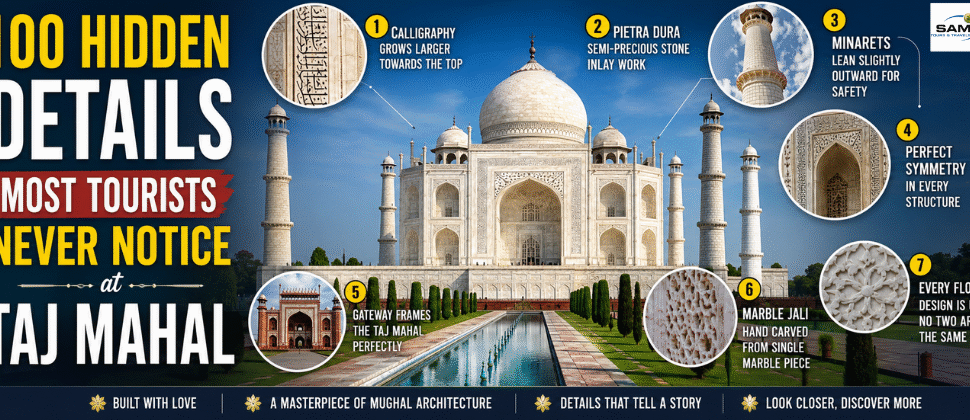
Inside the mausoleum, visitors find hundreds of carved flowers made from precious and semi-precious stones.
These floral designs are not direct copies of natural plants but stylized artistic interpretations, following the traditions of Islamic art.
Flowers symbolize:
- The beauty of God’s creation
- Renewal
- Eternal life
- Paradise
The detailed pietra dura inlay work reflects the Mughal appreciation for nature while avoiding realistic human or animal imagery in sacred spaces.
Geometric Patterns and Divine Order
Islamic architecture often uses geometric designs to express harmony, unity, and the infinite nature of God’s creation.
Throughout the Taj Mahal, visitors can observe:
- Eight-pointed stars
- Repeating polygons
- Interlocking patterns
- Balanced proportions
These designs have no beginning or end, symbolizing eternity and divine perfection.
Rather than depicting living beings, the patterns encourage reflection on order and creation.
Symmetry as a Reflection of Balance
One of the Taj Mahal’s most remarkable characteristics is its nearly perfect symmetry.
The mosque on one side is balanced by a matching guest house on the other. The minarets stand evenly around the mausoleum, while the gardens follow identical layouts.
Although symmetry itself is not a Quranic command, Islamic architecture frequently uses balance to symbolize harmony and order in creation.
This visual perfection contributes to the peaceful atmosphere visitors experience throughout the complex.
Light and Spiritual Meaning
Natural light plays an essential role in the Taj Mahal’s appearance.
As sunlight moves across the sky, the white marble changes color throughout the day. Moonlight transforms the monument into a glowing masterpiece.
In Islamic thought, light often symbolizes divine guidance, knowledge, and God’s presence. While the Taj Mahal does not explicitly represent the famous “Light Verse” of the Quran, its careful use of natural illumination complements broader Islamic artistic traditions.
The changing light reminds visitors that beauty is dynamic and that creation reflects divine artistry.
The Masterpiece of Amanat Khan Shirazi
The Quranic inscriptions on the Taj Mahal were created by the renowned Persian calligrapher Amanat Khan Shirazi.
His work is admired for both its artistic elegance and technical brilliance.
One remarkable feature is the optical illusion used in the calligraphy. Letters become gradually larger as they rise higher on the gateway, making them appear the same size when viewed from below.
This demonstrates the extraordinary planning and craftsmanship involved in decorating the monument.
Why the Quranic Verses Focus on the Afterlife
Many of the Quranic passages selected for the Taj Mahal emphasize themes such as:
- Mercy
- Resurrection
- Judgment
- Paradise
- Hope
- Eternal peace
These themes are appropriate because the Taj Mahal is a mausoleum built in memory of Mumtaz Mahal.
Rather than focusing on earthly achievements, the inscriptions encourage visitors to reflect on faith, mortality, and the promise of eternal life.
Common Misunderstandings About Quranic Symbolism
Over the years, several myths have circulated about the Taj Mahal’s religious symbolism.
It is important to separate historical evidence from speculation.
Myth: Every design element comes directly from the Quran.
Reality: Many features are inspired by broader Islamic architectural traditions rather than specific Quranic verses.
Myth: Every flower represents a particular Quranic verse.
Reality: Most floral designs symbolize Paradise and beauty but are not linked to individual verses.
Myth: Every measurement has hidden religious meaning.
Reality: The monument’s proportions primarily reflect Mughal architectural principles, engineering, and artistic balance.
Understanding these distinctions helps visitors appreciate the Taj Mahal more accurately.
Experiencing the Spiritual Side of the Taj Mahal
Whether a visitor comes for history, architecture, photography, or faith, the Taj Mahal offers a peaceful atmosphere unlike any other monument.
Walking through the gardens, reading the elegant Quranic calligraphy, hearing the gentle sound of fountains, and watching sunlight reflect on white marble create an experience that is both artistic and contemplative.
Even those unfamiliar with Islamic traditions often sense the calmness and harmony intentionally built into the complex.
Frequently Asked Questions
Are Quranic verses written on the Taj Mahal?
Yes. Several passages from the Quran are beautifully inscribed on the entrance gates, arches, and mausoleum using black marble inlay.
Who wrote the Quranic calligraphy?
The inscriptions were created by the famous Persian calligrapher Amanat Khan Shirazi, whose work remains one of the finest examples of Mughal calligraphy.
Does the Taj Mahal represent Paradise?
Many historians believe the layout of the gardens, water channels, and overall design intentionally evoke the Islamic concept of Jannah, or Paradise.
Are all decorations based on the Quran?
No. While the monument contains authentic Quranic verses, many decorative features draw from the wider traditions of Islamic art and Mughal architecture rather than directly illustrating specific Quranic passages.
Why is the Taj Mahal considered spiritually significant?
Its Quranic inscriptions, Paradise-inspired gardens, harmonious design, and emphasis on eternal life create a monument that combines architectural brilliance with profound spiritual symbolism.
Final Thoughts
The Taj Mahal is far more than an architectural masterpiece or a symbol of eternal love. It is also a remarkable expression of Islamic artistic traditions and spiritual ideals. Through carefully selected Quranic verses, Paradise-inspired gardens, flowing water, elegant calligraphy, geometric patterns, and harmonious symmetry, the monument invites visitors to reflect on beauty, faith, and the hope of eternal peace.
While not every feature can be linked directly to a specific Quranic verse, the Taj Mahal’s overall design embodies many themes celebrated in the Quran and Islamic culture. Understanding these inspirations allows visitors to appreciate the monument on a deeper level, seeing it not only as one of the world’s greatest architectural achievements but also as a timeless symbol of spirituality, craftsmanship, and devotion.