The Taj Mahal is more than a symbol of eternal love. For architects, engineers, and designers, it represents one of the greatest architectural achievements in human history. While millions of tourists admire its dazzling white marble and romantic story, architects see a masterpiece of geometry, engineering, craftsmanship, and urban planning. Every wall, dome, arch, and garden follows a carefully calculated design that has amazed experts for nearly 400 years.
Located on the banks of the Yamuna River in Agra, the Taj Mahal was commissioned by Mughal Emperor Shah Jahan in memory of his beloved wife Mumtaz Mahal. Construction began in 1632 and was completed around 1653, involving thousands of craftsmen, artisans, engineers, and stone workers from different regions of Asia.
Unlike many historical monuments that impress visitors with their size alone, the Taj Mahal captivates people because every detail works together perfectly. From the moment you enter the grand gateway until you stand beneath the magnificent dome, every step reveals another example of architectural brilliance. Looking at the Taj Mahal through the eyes of an architect helps us appreciate not only its beauty but also the extraordinary planning that made such perfection possible.
A Masterpiece Designed Around Perfect Symmetry
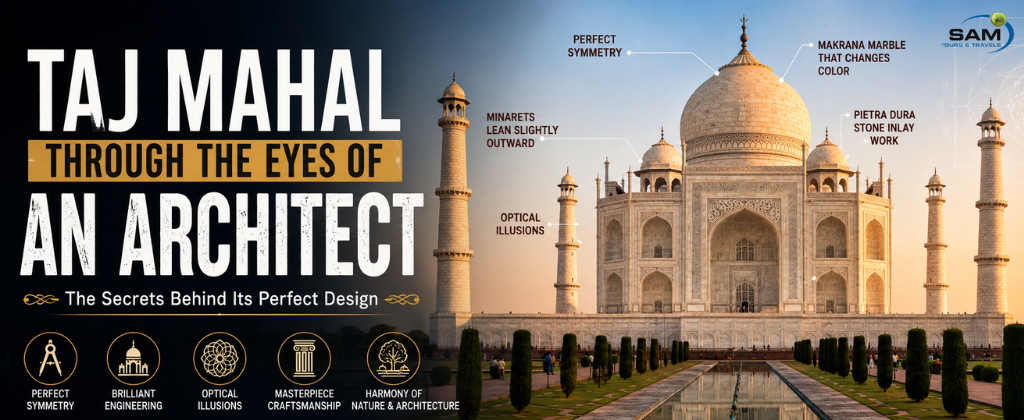
One of the first things architects notice about the Taj Mahal is its flawless symmetry. The monument appears perfectly balanced from almost every angle. The central mausoleum stands exactly in the middle, while identical buildings sit on both sides. Four elegant minarets surround the marble platform at equal distances, and even the gardens follow a precise geometric pattern.
This perfect balance creates a feeling of peace and harmony. Human eyes naturally appreciate symmetry because it makes spaces feel organized and pleasing. The Mughal architects understood this principle centuries before modern architectural psychology explained why symmetrical designs appeal to us.
However, achieving such precision without modern surveying equipment required remarkable mathematical knowledge. Every measurement had to match perfectly. Even the windows, arches, decorative panels, and pathways align with extraordinary accuracy. As a result, the Taj Mahal remains one of the finest examples of symmetrical architecture ever built.
The Brilliant Engineering Behind the White Marble Wonder
Although the Taj Mahal looks delicate, its engineering is incredibly strong. Since the monument stands close to the Yamuna River, builders first needed to create a foundation capable of supporting thousands of tonnes of marble.
Instead of using ordinary foundations, engineers built deep wells filled with stone and timber to stabilize the soft riverbank. This innovative solution distributed the enormous weight evenly across the ground and prevented the building from sinking.
Architects continue to study these techniques because they demonstrate remarkable engineering knowledge long before modern construction technology existed.
Why the Dome Looks So Perfect
The enormous white dome dominates the skyline of Agra. While visitors admire its graceful appearance, architects appreciate its intelligent structural design.
The onion-shaped dome rises approximately 35 metres above the main building. Instead of creating excessive pressure on the walls, its curved shape distributes weight evenly around the structure. Consequently, the building remains stable despite its massive size.
The lotus-shaped decoration beneath the finial also adds visual elegance while reflecting traditional Indian artistic influences. Together, the dome and finial create one of the most recognizable silhouettes in world architecture.
The Four Minarets Hide an Amazing Secret
Most visitors believe the four marble minarets stand perfectly upright. Surprisingly, architects know they lean slightly outward.
This tiny angle was intentional.
If an earthquake ever caused one of the towers to collapse, it would fall away from the central mausoleum instead of crashing into it. This clever design protected the most valuable part of the monument.
Even today, structural engineers admire this remarkable safety feature because it demonstrates advanced earthquake-resistant planning centuries before modern engineering standards developed.
Optical Illusions That Fool Every Visitor
The Taj Mahal contains several optical illusions that most tourists never notice.
As you walk through the Great Gate, the monument appears much larger than it actually is. Then, surprisingly, it seems to become smaller as you approach. This illusion results from careful calculations involving the size of the gateway and the surrounding open space.
Another clever illusion appears in the Arabic calligraphy decorating the entrance. The letters become gradually larger toward the top of the building. Because of this adjustment, every letter appears exactly the same size when viewed from ground level.
Architects admire these subtle visual tricks because they improve the visitor’s experience without drawing attention to themselves.
Geometry Creates Visual Harmony
Mathematics forms the foundation of the Taj Mahal’s beauty. Squares, circles, octagons, rectangles, and repeating geometric patterns appear throughout the monument.
These shapes do much more than create decoration. They help distribute structural loads, maintain balance, and guide visitors naturally through the complex.
For example, the central chamber follows an octagonal plan. This design improves both structural stability and sound quality while creating equal visual importance in every direction.
Modern architects still use many of these geometric principles when designing museums, memorials, and public buildings.
Makrana Marble: A Material Chosen for Perfection
The builders selected white Makrana marble from Rajasthan because of its exceptional quality.
Unlike ordinary stone, Makrana marble reflects sunlight beautifully throughout the day. During sunrise, it appears soft pink. By midday, it shines brilliant white. At sunset, golden shades emerge, while moonlight transforms the monument into a glowing silver masterpiece.
Besides its beauty, Makrana marble offers excellent durability. Even after centuries of weather exposure, much of the original stone continues to display its remarkable smooth finish.
Architects often describe this as one of the finest material selections in architectural history.
Pietra Dura: Stone Inlay That Looks Like Painting
Visitors often assume the colourful flowers decorating the marble walls were painted.
In reality, artisans used an extraordinary technique called Pietra Dura. Skilled craftsmen carefully carved tiny cavities into the marble before inserting semi-precious stones such as jade, jasper, turquoise, agate, lapis lazuli, and onyx.
Each stone fits so perfectly that the joints remain almost invisible.
This decorative method required incredible patience because every flower consists of dozens of individually shaped pieces. Even with modern technology, reproducing this craftsmanship remains extremely difficult.
The Gardens Are Part of the Architecture
Many visitors focus only on the marble mausoleum, yet architects know the surrounding gardens are equally important.
The Taj Mahal follows the traditional Persian Charbagh garden layout. Four water channels divide the gardens into equal sections representing the rivers of paradise described in Islamic tradition.
Long reflecting pools mirror the monument perfectly and create stunning photographs. Meanwhile, tree-lined pathways guide visitors toward the mausoleum while gradually revealing different viewpoints.
Instead of treating the landscape as decoration, the designers made it an essential part of the overall architectural experience.
Water Engineering Ahead of Its Time
Supplying water to the gardens required remarkable engineering.
The builders developed a sophisticated hydraulic system using underground pipelines, storage tanks, Persian wheels, and gravity-fed channels.
Consequently, fountains across the complex produced consistent water pressure without electricity or modern pumps.
This advanced water management system demonstrates how Mughal engineers combined beauty with practical functionality.
A Blend of Three Great Architectural Traditions
Architects admire the Taj Mahal because it combines several architectural styles into one harmonious design.
Persian influences appear in the Charbagh gardens and monumental gateways.
Islamic architecture contributes geometric decoration, elegant arches, intricate calligraphy, and perfect symmetry.
Meanwhile, Indian craftsmanship appears in the lotus motifs, marble carvings, decorative brackets, and floral patterns.
Instead of competing with one another, these traditions blend seamlessly. Consequently, the Taj Mahal feels unified rather than divided into different cultural styles.
The Calligraphy Is an Engineering Marvel
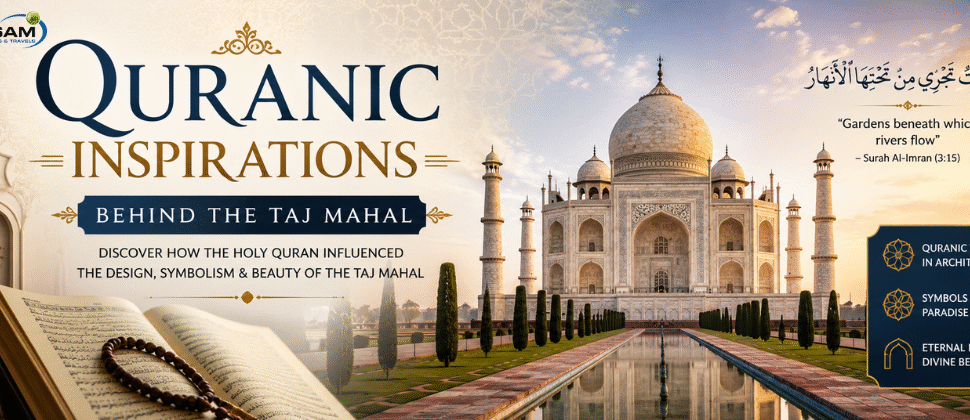
The Quranic verses decorating the entrances are much more than beautiful writing.
Architects and designers admire the way each letter increases in size as it rises higher on the walls. This careful adjustment corrects natural perspective, making every character appear equal when viewed from below.
Without this clever planning, the upper letters would seem much smaller.
The technique demonstrates the remarkable understanding of human vision possessed by Mughal designers.
The Monument Changes Colour Throughout the Day
Architects often describe the Taj Mahal as a living building because it never looks exactly the same twice.
Morning sunlight creates delicate pink tones.
Midday produces brilliant white reflections.
Evening light introduces golden shades.
Moonlight transforms the marble into a glowing silver monument.
These changing colours result from the interaction between natural light and Makrana marble rather than paint or artificial effects.
Because of this phenomenon, photographers and architects often visit multiple times to study how light influences the building’s appearance.
Lessons Modern Architects Still Learn
Although nearly four centuries have passed since its completion, the Taj Mahal continues to inspire architects worldwide.
Modern designers study its symmetry when planning museums and memorials. Engineers examine its foundation techniques for riverside construction. Landscape architects admire the relationship between gardens and buildings. Interior designers appreciate the careful balance between decoration and simplicity.
Perhaps the greatest lesson is that true architecture combines beauty with purpose. Every feature of the Taj Mahal performs both an artistic and functional role. Nothing feels unnecessary, and nothing appears out of place.
Final Thoughts
Viewing the Taj Mahal through the eyes of an architect reveals a monument far more remarkable than its famous love story alone. It showcases mathematical precision, innovative engineering, artistic craftsmanship, advanced water management, and timeless design principles that continue to influence architecture today.
Every dome, minaret, garden, arch, and marble panel reflects careful planning rather than coincidence. Even the smallest decorative detail contributes to the overall harmony of the structure. That remarkable attention to detail explains why the Taj Mahal remains one of the most admired buildings ever created.
Whether you are an architecture student, a history enthusiast, a photographer, or a first-time visitor, exploring the Taj Mahal from this perspective will deepen your appreciation for one of humanity’s greatest architectural masterpieces. The next time you stand before its gleaming white marble, take a moment to look beyond its beauty. You will discover a monument where art, science, mathematics, and engineering come together in perfect balance—a masterpiece that continues to inspire the world nearly 400 years after its completion.