The Taj Mahal is one of the world’s most visited monuments, attracting millions of travellers every year. Most visitors arrive with a camera, a list of famous viewpoints, and the dream of seeing one of the Seven Wonders of the World. They admire the white marble, take photographs, and leave with unforgettable memories. However, many never discover the hidden stories that make the Taj Mahal truly extraordinary.
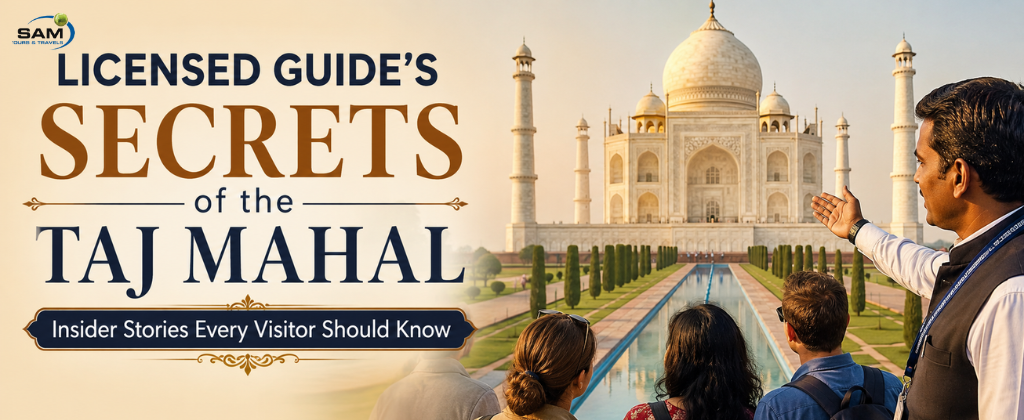
A licensed guide doesn’t simply explain dates and historical facts. An experienced guide helps you understand the monument’s symbolism, architecture, craftsmanship, and cultural importance. They point out details that are easy to miss and answer questions that signboards cannot. By the end of the tour, you begin to see the Taj Mahal not only as a beautiful building but also as a masterpiece filled with fascinating stories.
If you’re planning a visit to Agra, here are some of the best secrets and insights that licensed guides often share with travellers.
Why a Licensed Guide Makes Your Visit More Meaningful
Walking through the Taj Mahal without a guide is certainly possible. However, many visitors leave without understanding the remarkable details hidden throughout the complex.
A licensed guide explains the story behind every important feature. Instead of simply showing the monument, they explain why each part was designed in a particular way. As a result, your visit becomes more engaging and educational.
Professional guides also know the best times to explore different sections, the ideal photography spots, and the quieter areas where you can appreciate the monument without rushing.
The First Surprise Starts at the Main Gateway
Many visitors believe the tour begins when they first see the Taj Mahal. In reality, the experience starts at the grand entrance gate.
Licensed guides often ask visitors to stop beneath the central arch before entering the gardens. From this point, the Taj Mahal appears perfectly framed like a painting. The architects intentionally created this dramatic view to build excitement before revealing the full monument.
Another interesting observation is the visual illusion created by the entrance. As you walk closer, the Taj Mahal appears to change size because of the carefully planned proportions of the gateway and gardens.
The Calligraphy Hides an Optical Illusion
One of the most impressive secrets is found in the Quranic calligraphy decorating the main entrance.
From the ground, every letter appears to be the same size. However, guides explain that the letters become gradually larger as they rise higher on the walls.
Why did the craftsmen do this?
They adjusted the size to compensate for perspective. Consequently, visitors looking up see perfectly balanced inscriptions.
This clever technique demonstrates the extraordinary planning behind the monument.
Every Flower Tells a Story
Most travellers notice the colourful flowers carved into the marble. Yet very few understand their meaning.
Licensed guides explain that these flowers are not random decorations. They symbolize paradise, purity, eternal life, and beauty. The designs also reflect Persian and Mughal artistic traditions.
Look closely and you’ll notice another fascinating detail. No two flowers are exactly the same. Skilled artisans created each pattern by hand, giving every design its own unique character.
The Marble Is More Than White Stone
Visitors often describe the Taj Mahal as a white marble monument. While that description is true, it doesn’t tell the whole story.
Experienced guides explain that the marble came from Makrana in Rajasthan, where builders sourced some of India’s finest stone. This marble reflects light beautifully and changes appearance throughout the day.
At sunrise, the monument often displays soft pink shades. During the afternoon, it looks brilliant white. As the sun sets, warm golden tones appear before fading into a silvery glow under moonlight.
Knowing this helps visitors choose the best time for photography.
The Four Minarets Are Not Perfectly Straight
This is one of the favourite facts shared by licensed guides.
At first glance, the four minarets appear completely vertical. In reality, each tower leans slightly outward.
The angle is extremely small, making it almost impossible to notice without careful observation.
Builders designed them this way for safety. If a major earthquake ever damaged the towers, they would fall away from the central mausoleum rather than onto it.
Hidden Details Inside the Marble
Guides often encourage visitors to move closer to the marble walls instead of looking only at the main dome.
The colourful artwork is not paint. Craftsmen used the Pietra Dura technique to insert semi-precious stones into carved marble.
Among the stones used are:
- Jasper
- Jade
- Lapis lazuli
- Carnelian
- Turquoise
- Agate
- Onyx
Each stone adds colour while creating flowers, leaves, and vines that still look beautiful centuries later.
The Cenotaphs Are Not the Actual Graves
Inside the mausoleum, visitors see beautifully decorated marble tombs dedicated to Shah Jahan and Mumtaz Mahal.
Licensed guides explain an important detail that surprises many people.
These are symbolic cenotaphs.
The actual graves are located in a lower chamber beneath the main hall, following Mughal burial traditions. Understanding this difference helps visitors appreciate both the religious and architectural significance of the monument.
Photography Tips Shared by Local Guides
A knowledgeable guide also knows how to help visitors capture memorable photographs.
Some useful suggestions include:
- Visit early in the morning for softer light.
- Use the reflecting pool to capture symmetrical images.
- Explore the side pathways for quieter angles.
- Include the gardens to add depth to your photographs.
- Photograph the marble inlay from close range to highlight the craftsmanship.
Small changes in position can completely transform your photos.
Common Myths That Guides Correct
Licensed guides frequently answer questions based on popular myths.
One common story claims that workers had their hands cut off after construction. Historians have found no reliable evidence to support this claim.
Another myth suggests the Taj Mahal changes colour because it is painted. In reality, the changing appearance comes from the way Makrana marble reflects natural light throughout the day.
Guides also explain that many internet stories mix legend with history. Listening to verified information helps visitors understand the monument more accurately.
How to Explore Like an Experienced Traveller
If you want to enjoy the Taj Mahal fully, don’t rush through the complex.
Take time to observe the marble inlay, the floral carvings, the calligraphy, and the carefully planned symmetry.
Ask questions during your tour. Look beyond the famous photo spots. Spend a few quiet moments in the gardens and notice how the monument changes as the light shifts.
These simple steps often turn a standard visit into an unforgettable experience.
Final Thoughts
The Taj Mahal is much more than a beautiful monument. It is a masterpiece filled with hidden stories, artistic brilliance, and remarkable engineering. While every visitor admires its impressive architecture, licensed guides help uncover the details that many people overlook.
From optical illusions and symbolic flowers to marble inlay and fascinating historical insights, every corner of the Taj Mahal has a story worth discovering. The next time you visit, slow down, look closely, and let an experienced guide introduce you to the secrets hidden within one of the world’s greatest architectural wonders.