Introduction
The Taj Mahal attracts millions of visitors every year with its dazzling white marble, graceful dome, and timeless beauty. Most travellers admire the monument from a distance, take memorable photographs, and leave with a sense of wonder. Yet, only a few stop to examine the intricate marble artwork that covers its walls. Hidden within these delicate designs is a fascinating story of craftsmanship, symbolism, and artistic excellence.
Every flower, vine, leaf, and gemstone set into the marble carries a deeper meaning. Skilled artisans did not create these patterns simply to decorate the monument. Instead, they used them to express ideas of love, paradise, eternity, and harmony. Once you understand these hidden symbols, the Taj Mahal becomes much more than a beautiful building. It transforms into a masterpiece where every stone tells its own story.
The Art of Pietra Dura
One of the most remarkable features of the Taj Mahal is its marble inlay work. This decorative technique is known as Pietra Dura, while many Indian artisans call it Parchin Kari. Instead of using paint, craftsmen carved shallow grooves into the marble and filled them with carefully shaped semi-precious stones.
After placing every stone, they polished the surface until it became perfectly smooth. As a result, the colourful gemstones appear to grow naturally from the white marble. Even today, visitors often struggle to find the edges of the individual stones because the craftsmanship is so precise.
Moreover, this technique helped preserve the artwork for centuries. Unlike paint, natural gemstones do not lose their colour easily, making the designs as vibrant today as they were hundreds of years ago.
Why Shah Jahan Chose Marble Inlay
Mughal Emperor Shah Jahan wanted the Taj Mahal to represent eternal love. Therefore, he selected materials that could withstand the passage of time.
Makrana marble from Rajasthan became the perfect choice because of its strength, smooth texture, and brilliant white colour. The bright surface also provided an ideal background for colourful gemstones. Consequently, every floral design stood out without overwhelming the architecture.
In addition, the polished marble reflects sunlight beautifully. During sunrise, the monument often appears pink. By afternoon, it shines bright white, while the evening light gives it a warm golden glow. These natural colour changes add another layer of beauty to the inlay work.
Every Flower Has a Meaning
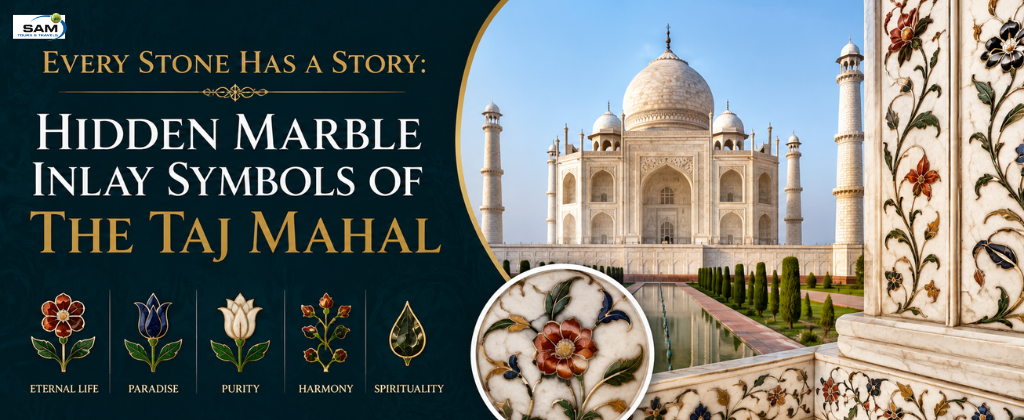
At first glance, the floral patterns seem decorative. However, they carry symbolic messages inspired by Mughal and Persian traditions.
Many flowers represent paradise, eternal life, and spiritual peace. Others symbolize purity, hope, beauty, and renewal. Together, these designs create a peaceful atmosphere throughout the monument.
Interestingly, no two flowers are exactly alike. Although the patterns appear symmetrical from a distance, each blossom has small differences. This thoughtful approach gives the artwork a natural appearance while showcasing the extraordinary talent of the artisans.
Furthermore, the flowers never fade because craftsmen created them from colourful stones instead of pigments.
Precious Stones Hidden Inside the Marble
The Taj Mahal contains dozens of beautiful gemstones collected from different regions.
Some of the most famous stones include:
- Jasper for rich red colours.
- Jade for green leaves.
- Lapis Lazuli for deep blue petals.
- Carnelian for orange and reddish tones.
- Turquoise for bright blue highlights.
- Agate for delicate patterns.
- Onyx for dark outlines.
- Mother-of-pearl for gentle shimmer.
Each stone served both an artistic and symbolic purpose. Besides adding colour, these gemstones reflected the wealth, vision, and craftsmanship of the Mughal Empire.
The Craftsmanship Behind Every Design
Creating marble inlay demanded patience and precision.
First, artists sketched the complete pattern on the marble. Next, expert craftsmen carved tiny grooves with hand tools. Afterwards, specialists shaped every gemstone until it matched the design perfectly. Finally, they polished the surface repeatedly to achieve a seamless finish.
Because every stage required exceptional skill, artisans often spent several days completing only a small section. Even the smallest mistake could ruin both the marble and the gemstone.
Today, these intricate designs continue to impress architects, historians, and artists around the world.
Hidden Symbols Most Visitors Miss
Many travellers admire the colourful artwork without realizing its deeper meaning.
For example, climbing vines symbolize continuous life and growth. Flower buds represent hope and new beginnings. Fully opened blossoms reflect beauty and perfection, while repeating leaves suggest harmony and balance.
Similarly, geometric borders symbolize order and infinity. Their precise repetition reflects the Mughal appreciation for mathematics and symmetry.
Once visitors understand these hidden meanings, the monument feels far more personal and meaningful.
Why the Inlay Has Lasted for Centuries
The marble artwork has survived for nearly four hundred years because of several important factors.
First, Makrana marble is naturally durable. Second, gemstones retain their colours much longer than paint. Finally, regular conservation efforts help protect the monument from pollution and weather damage.
Nevertheless, preservation also depends on responsible tourism. Visitors should avoid touching the marble because oils and scratches can damage delicate surfaces over time.
How to Appreciate the Marble Inlay
If you plan to visit the Taj Mahal, slow down and observe the details carefully.
Begin with the lower marble panels because they are easier to examine. Next, compare different flowers and notice how each design varies slightly. Afterwards, study the tiny joints between the gemstones. Finally, step back and admire how the complete pattern blends perfectly into the architecture.
Morning and late afternoon offer the best lighting for observing these details. Soft sunlight creates gentle shadows that reveal the depth of every carving while highlighting the natural colours of the gemstones.
A Living Tradition in Agra
The story of marble inlay did not end with the completion of the Taj Mahal.
Even today, skilled artisans in Agra continue practising Parchin Kari. They create beautiful marble tabletops, jewellery boxes, decorative plates, coasters, and home décor using techniques passed down through generations.
Watching these craftsmen at work helps visitors appreciate the patience required to create even the smallest design. It also keeps one of India’s finest artistic traditions alive.
Conclusion
The Taj Mahal is famous for its magnificent architecture, but its greatest treasures often hide in the smallest details. Every gemstone, flower, leaf, and vine reflects centuries of artistic excellence and careful planning. Rather than decorating the monument alone, the marble inlay tells a silent story of love, faith, beauty, and eternity.
The next time you visit the Taj Mahal, spend a few extra minutes studying the marble instead of only admiring the dome. Look closely at the colourful flowers, observe the polished gemstones, and notice the remarkable precision of every pattern. As you explore these hidden details, you will discover that every stone truly has a story—and together, they create one of the greatest masterpieces ever built.